



 Editorial Team
types of architectural glass decisions are strongest when design intent, technical evidence and real project conditions are reviewed together. A concise guide to common architectural glass types and the performance questions behind façade and interior specifications.
Toughened and heat-strengthened glass
Heat-treated glass improves strength and thermal-shock performance compared with ordinary annealed glass. Toughened glass breaks into small fragments, while heat-strengthened glass has different breakage behaviour and residual strength characteristics. The choice depends on safety, structural design and system requirements.
Laminated safety glass
Laminated glass bonds two or more panes with an interlayer. When broken, fragments can remain adhered, making it useful for overhead glazing, balustrades, façades and security applications depending on design. Interlayer type and thickness also influence post-breakage behaviour, acoustics and UV performance.
Insulated glazing units and Low-E coatings
IGUs use sealed cavities between panes to improve thermal performance. Low-emissivity coatings reduce heat transfer and can be combined with solar-control coatings to manage cooling loads and daylight. Compare U-value, solar heat-gain data, visible-light transmission and coating position for the actual build-up.
Fritted, tinted, back-painted and decorative glass
Ceramic frits can control solar gain, bird visibility or privacy while creating pattern. Tints alter colour and solar properties. Back-painted glass works for opaque interior applications, while textured or cast glass provides diffusion. Colour should be reviewed with full-size samples because thickness and lighting influence appearance.
Smart and switchable glazing
Electrochromic, SPD and liquid-crystal systems can change light transmission or privacy state. They require controls, electrical coordination and realistic expectations for switching speed, colour and maintenance. Evaluate the complete system, warranty and replacement strategy rather than treating smart glass as a conventional pane.
Quick specification checklist
- Confirm the exact product, finish, size and approved sample.
- Check mandatory fire, moisture, slip, acoustic, structural or emissions requirements.
- Compare installed cost, lead time, wastage and replacement availability.
- Verify installation details, substrates, joints and adjacent-material interfaces.
- Request maintenance, warranty and technical evidence before final approval.
Common specification mistakes to avoid
Do not approve a product only from a mood-board image or a generic catalogue description. Confirm the exact product code, finish, thickness, tested performance and installation method. Avoid copying supplier claims into the specification without checking the evidence and scope. Also check lead time, minimum order quantity, local service support and replacement availability before the design is locked. These practical checks reduce substitutions, site delays and maintenance problems later.
How to source and compare products efficiently
When researching types of architectural glass, build a shortlist of products that meet the same mandatory criteria, then compare them side by side. Ask every supplier for the same information so the decision remains fair: technical datasheet, relevant test reports, environmental documentation where required, warranty, installation guide, sample, lead time and commercial basis. Save the approved option together with one or two technically acceptable alternatives so value engineering does not restart the material search from zero.
Frequently asked questions
Is toughened glass the same as laminated glass?
No. Toughening is a heat treatment; lamination bonds layers with an interlayer. They can also be combined.
What does Low-E glass do?
Low-emissivity coatings reduce long-wave heat transfer and are used to improve glazing thermal performance.
Which glass is used for railings?
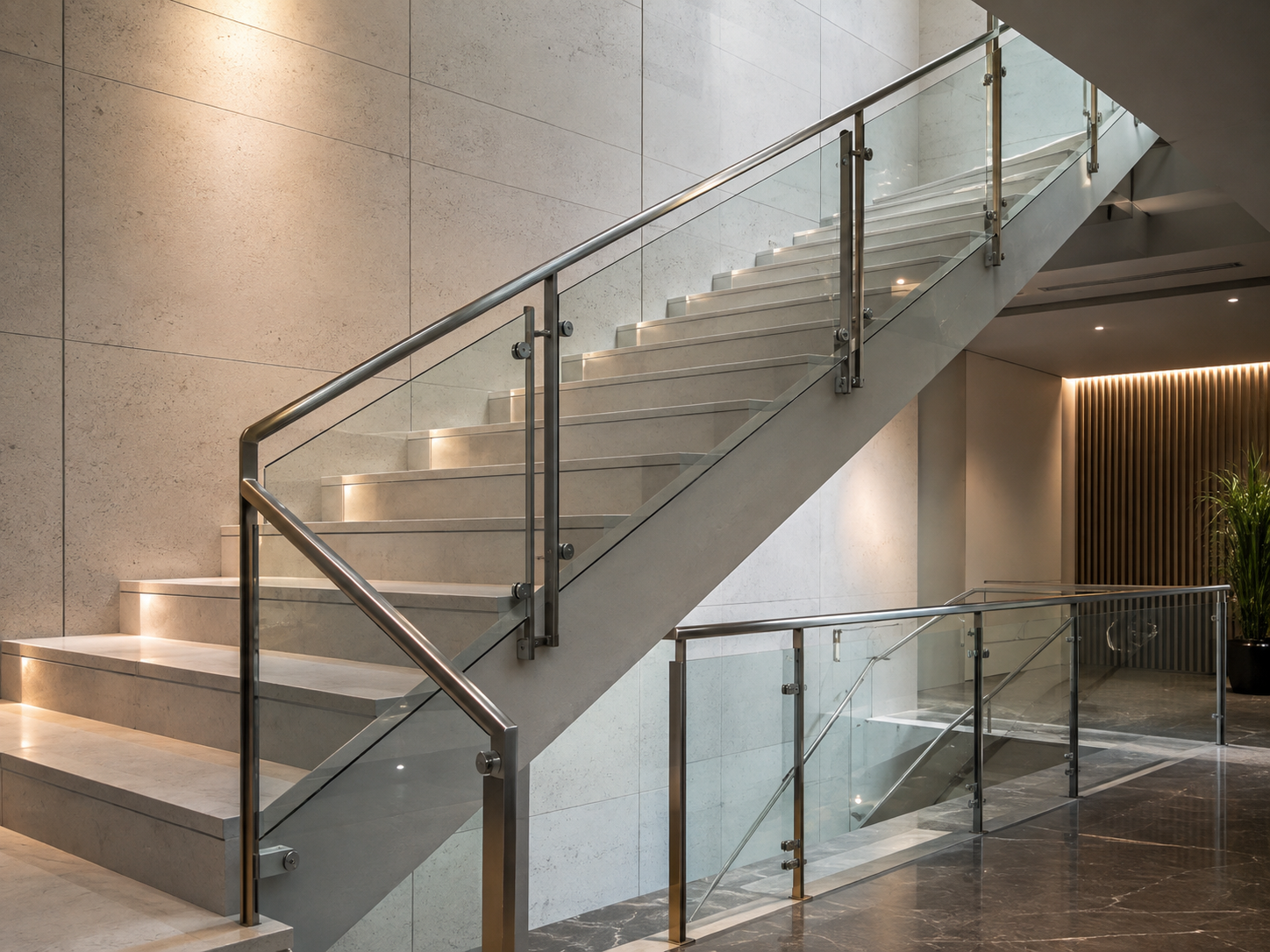
Laminated safety-glass configurations are common, often with heat treatment, but structural design and local code determine the required build-up.
Explore verified materials
Use the All About Material directory to compare products, review technical information and connect with material brands. Save suitable products to your project workspace before final specification.